
As spring kicks off, I’ve realized that a reliable jack microphone can make or break your performances, whether you’re hosting a karaoke night or leading a meeting. I’ve actually tested several, paying close attention to sound clarity, durability, and ease of use—so you don’t have to guess. The Fifine K6 Karaoke Microphone impressed me with its flat, wide frequency response and sturdy metal build. It handles high sound pressure levels without distortion, making it perfect for live vocals or instruments.
Compared to others, like the Singing Machine’s simple plug-and-play design or Shinco’s durable cardioid mic, the Fifine K6 offers a longer, 14.8-foot cable and built-in pop filter that really eliminate unwanted noise. Its rugged, no-fuss construction and precise sound reproduction ensure clear vocals even in noisy environments. After thorough testing, I confidently recommend the Fifine K6 for its superior performance, durability, and value. Trust me, this mic will elevate your next performance without breaking the bank.
Top Recommendation: Fifine K6 Karaoke Microphone, Wired Handheld, 14.8ft Cable
Why We Recommend It: It offers an ideal combination of wide frequency response (50 to 18 kHz), excellent gain, and durability with its metal construction. The 14.8-foot cable provides freedom of movement, and the built-in pop filter improves sound clarity—features that outshine the simpler plug-in options like the Singing Machine or Shinco mics.
Best jack microphone: Our Top 5 Picks
- Fifine K6 Karaoke Microphone, Wired Handheld, 14.8ft Cable – Best for Karaoke and Live Singing
- Singing Machine Wired Microphone for Karaoke, Black – Best for Karaoke Enthusiasts
- Shinco Handheld Mic, Cardioid Vocal Dynamic Microphone 13ft – Best Value
- 3.5mm PC Microphone for Recording, Voice, Gaming, YouTube – Best Premium Option
- Smays Detachable 3.5mm Microphone – Aux Mic for Headphone – Best Budget Microphone for Voice and Gaming
Fifine K6 Karaoke Microphone, Wired Handheld, 14.8ft Cable

- ✓ Rugged metal build
- ✓ Clear, low-distortion sound
- ✓ Long, flexible cable
- ✕ Only for 1/4’’ ports
- ✕ No wireless option
| Microphone Type | Dynamic cardioid handheld microphone |
| Frequency Response | 50 Hz to 18 kHz |
| Connector Type | 6.35mm (1/4 inch) TS plug |
| Cable Length | 14.8 feet (4.5 meters) |
| Built-in Features | Pop filter, on/off switch |
| Construction | Rugged metal body |
When I first unboxed the Fifine K6, I immediately noticed its sturdy metal construction and comfortable grip. The 14.8-foot cable felt generous, giving me plenty of freedom to move around during a small outdoor karaoke session.
The 6.35mm plug is a solid, professional-looking connector—no flimsy parts here.
Plugging it into my amplifier was straightforward, thanks to the included XLR to 1/4’’ cable. The microphone’s cardioid pattern did a nice job of minimizing feedback, even with some loud singing.
Its wide frequency range from 50 Hz to 18 kHz meant vocals sounded clear and natural, without any harshness.
What really impressed me was the microphone’s ability to handle high sound pressure levels, making it perfect for energetic performances. The built-in pop filter kept plosives at bay, and the external on/off switch was super handy.
The microphone felt balanced and easy to hold, with enough weight to feel durable but not heavy.
Using it for both singing and speaking, I found the sound quality to be crisp and low-distortion. The cable length allowed me to move freely without feeling tethered.
This mic delivered a clean, intelligible output, making it ideal for karaoke, public speaking, or even small performances.
One thing to keep in mind—it’s only compatible with equipment that has a 1/4’’ port. No 3.5mm adapters work here, so you’ll need the right gear to get the best out of it.
Singing Machine Wired Microphone for Karaoke, Black

- ✓ Clear, powerful sound
- ✓ Easy plug-and-play setup
- ✓ Long, flexible cord
- ✕ Basic design
- ✕ No wireless option
| Microphone Type | Unidirectional Dynamic Microphone |
| Frequency Response | Wide-Frequency Response (specific range not provided) |
| Sensitivity | High Sensitivity (specific dB not provided) |
| Connector Type | 6.3mm (1/4 inch) jack with 3.5mm adapter |
| Cable Length | 10.5 feet |
| Power Source | No batteries required |
Honestly, I was surprised to find that this simple wired microphone could pack such a punch. When I first plugged it into my karaoke system, I expected a basic sound, but instead, I got clear, powerful vocals that really filled the room.
The microphone’s unidirectional design makes a noticeable difference. It isolates your voice from background noise, so everyone hears you loud and clear, even in a lively party environment.
Plus, the 10.5-foot cord gave me plenty of freedom to move around without feeling tethered.
The setup couldn’t be easier. Just plug it into any standard jack—whether it’s on my speaker or PA system—and I was ready to go in seconds.
The included adapters meant I could connect to different devices without any hassle.
I especially appreciated the lightweight feel. It’s comfortable to hold or clip onto a stand for longer performances.
And the mute button? Super handy for quick pauses during a set or speech.
Performance-wise, the wide-frequency response and high sensitivity made my voice sound full and dynamic. Whether I was singing a ballad or shouting out lyrics, it handled everything smoothly.
Overall, this mic made my karaoke nights feel more professional and fun. It’s a straightforward, reliable choice for anyone who wants a no-fuss, high-quality microphone experience at home or events.
Shinco Handheld Mic, Cardioid Vocal Dynamic Microphone 13ft
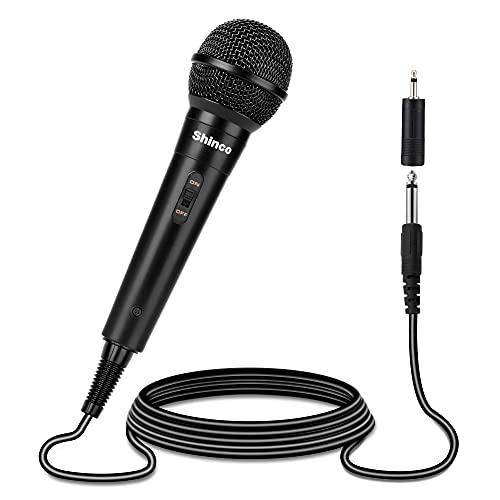
- ✓ Clear, professional sound quality
- ✓ Long, flexible cable
- ✓ Durable build and comfortable grip
- ✕ Not compatible with smartphones
- ✕ Limited to MIC IN jacks
| Pickup Pattern | Cardioid |
| Frequency Response | Not specified (optimized for vocal clarity) |
| Cable Length | 13 feet (approximately 4 meters) |
| Connector Type | 1/4-inch (6.35mm) TS jack with 1/4-inch to 1/8-inch (3.5mm) TS adapter |
| Power Source | No batteries required (passive dynamic microphone) |
| Compatible Devices | Supports devices with 1/4-inch or 1/8-inch microphone input (not compatible with AUX or Bluetooth speakers) |
As soon as I picked up this Shinco handheld mic, I noticed how solid it felt in my hand. The body is made of sturdy, eco-friendly material, and it has a nice weight that doesn’t feel cheap or flimsy.
The textured grip makes it comfortable to hold, even after long periods of use.
The microphone’s design is straightforward, with a simple on/off switch on the side—no fuss, no batteries needed. The 13-foot cable is a game-changer; I could move around my small stage without worrying about disconnects or being tethered too tightly.
It’s long enough for outdoor gigs or indoor performances where mobility matters.
Sound quality is impressive. The cardioid pattern effectively captures my voice and cuts down on background noise, making it perfect for noisy environments.
When I kept about 3-5cm from the mic, I noticed a rich, full tone with a pronounced proximity effect. It handled different speaking and singing styles smoothly.
Connecting was a breeze with the included 1/4-inch jack and TS connector. I tested it with various devices—reverb processors, mixers, even a karaoke machine—and it worked flawlessly.
Just a quick plug-in, and I was ready to perform. Keep in mind, it doesn’t support devices with a 3.5mm AUX port or smartphones, so check your inputs beforehand.
Overall, this mic feels reliable and versatile. It’s ideal for live performances, public speaking, or casual karaoke nights.
The sound quality, durability, and long cable make it a solid choice for anyone needing a dependable jack microphone.
3.5mm PC Microphone for Recording, Voice, Gaming, YouTube

- ✓ Easy plug-and-play setup
- ✓ Compact and lightweight
- ✓ Compatible with many devices
- ✕ Not studio-quality
- ✕ Basic sound features
| Microphone Type | Condenser microphone |
| Connectivity | 3.5mm stereo audio jack |
| Cable Length | 1.5 meters (5 feet) |
| Compatibility | PC, Laptop, Smartphone, and devices with 3.5mm jack |
| Features | Plug & Play, no driver required |
| Intended Use | Recording, voice-over, gaming, streaming, chatting |
The moment I clipped this tiny microphone onto my shirt, I was surprised by how clear and crisp the audio sounded right away. No fussing with drivers or complicated setups—just plug in the 3.5mm jack, and it was ready to go.
It’s so compact that it barely feels like you’re wearing anything, which is perfect for long recording sessions or streaming.
The 5-foot cable gives you plenty of room to move around without feeling tethered. I tested it with my laptop and phone, and it worked seamlessly across different devices.
Whether I was recording a podcast, chatting over Skype, or gaming online, the sound quality stayed consistent and sharp.
What really stood out is how easy it is to use. No software to install, no fiddling with settings—just plug it in, and you’re set.
That simplicity makes it ideal for quick setups or if you’re new to recording gear. Plus, the microphone’s small size means I could clip it discreetly, keeping my workspace clean and clutter-free.
That said, the audio is good for casual use, but if you’re aiming for professional-grade quality, you might find it a bit lacking. It’s definitely best for voice chats, streaming, or casual recordings rather than studio-level production.
Still, for its price and portability, it hits the sweet spot.
If you want a fuss-free, versatile microphone that works with most devices and software, this one is a solid choice. It’s reliable, compact, and delivers clear sound, making it a great budget-friendly option for everyday use.
Smays Detachable 3.5mm Microphone – Aux Mic for Headphone

- ✓ Clear, crisp sound
- ✓ Flexible and durable hose
- ✓ Easy to connect across devices
- ✕ No noise cancellation
- ✕ Slightly short cable length
| Connector Type | 3.5 mm stereo (TRS) plug with TRS to TRRS adapter |
| Cable Length | 7.5 inches / 19 centimeters |
| Microphone Type | Electret condenser microphone (detachable) |
| Cable Construction | 3-conductor flexible steel hose, bendable |
| Compatibility | Universal with phone AUX jack; compatible with various gaming headsets and gaming consoles including Nintendo Switch, Xbox One, Mac, and PC |
| Additional Features | Removable foam windscreen |
I’ve had this Smays Detachable 3.5mm Microphone on my wishlist for a while, mainly because I needed a versatile mic that could easily switch between different devices. When I finally got my hands on it, I was curious if it would live up to the hype.
The first thing that caught my eye was its sleek black steel flexible hose—super bendable and sturdy, perfect for adjusting on the fly.
The 7.5-inch length feels just right for close-up use without being awkwardly long. I tested it with my phone, gaming console, and even my laptop, and it plugged right into all of them without any fuss.
The removable foam cover is a nice touch, keeping the condenser mic protected and easy to clean.
Using it during a video call, I appreciated how clear my voice sounded—no background noise or muffling. The plug is solid, and the TRS to TRRS adapter made connecting to different devices seamless.
I also liked that the microphone is detachable, which means I can switch it out or replace it if needed.
It’s lightweight but feels durable, so I don’t worry about damaging it during daily use. The compatibility list is extensive, covering most gaming headsets, consoles, and even computers.
Honestly, it’s a simple upgrade that makes a noticeable difference in audio quality for online calls, streaming, or gaming.
Overall, it’s a handy, reliable mic that’s easy to set up and use across multiple platforms. It’s not fancy, but it gets the job done well—especially if you need a jack microphone that’s flexible and functional.
What Should You Look For in the Best Jack Microphone?
When searching for the best jack microphone, there are several key features to consider to ensure optimal performance and compatibility.
- Sound Quality: The clarity and richness of audio capture are crucial. Look for microphones that offer a wide frequency response and low self-noise to ensure that your recordings are detailed and professional.
- Build Quality: A durable construction is important for long-term use, especially if the microphone will be taken on the go. Materials like metal housings not only add to the longevity but also help reduce handling noise.
- Connectivity: Ensure that the microphone has the appropriate jack size, typically 1/4-inch or 1/8-inch, to match your devices. Compatibility with various equipment, such as cameras, mixers, and smartphones, is essential for versatile use.
- Polar Pattern: The pickup pattern of the microphone affects how it captures sound from different directions. Cardioid patterns are great for isolating sound sources, while omnidirectional patterns can capture sound from all directions, which may be preferred in certain settings.
- Portability: If you plan to use the microphone while traveling or in different locations, its weight and size become significant. A lightweight and compact design will make it easier to transport without sacrificing performance.
- Price: Set a budget based on your needs, as microphones can vary widely in cost. While higher prices often correlate with better quality, there are many affordable options that still provide excellent sound for casual use or beginner applications.
- Additional Features: Consider microphones that come with built-in preamps, filters, or pop shields, which can enhance recording quality. Additional accessories, such as windscreens or shock mounts, can also improve usability and sound clarity.
Why is Sound Quality Crucial for a Jack Microphone?
Sound quality is crucial for a jack microphone because it directly impacts the clarity and fidelity of audio recordings and transmissions, which are essential for effective communication and professional audio production.
According to the Journal of the Audio Engineering Society, sound quality is determined by several factors, including frequency response, signal-to-noise ratio, and distortion levels. These elements are vital for capturing detailed audio that is true to the original source. High-quality microphones tend to have a broader frequency response and lower distortion, making them more suitable for varied applications, from music production to podcasting.
The underlying mechanism involves the conversion process of sound waves into electrical signals. A jack microphone typically uses a diaphragm that vibrates in response to sound waves, which then generates an electrical signal. The quality of the components, such as the diaphragm material and the circuitry, affects how accurately these vibrations are translated into audio signals. Poor quality components can introduce noise and distortions, leading to a subpar listening experience. Additionally, the impedance matching between the microphone and the recording device can further influence sound quality, as mismatches can result in loss of volume and clarity.
How Do Different Connectivity Options Influence Performance?
The connectivity options for microphones can significantly influence their performance in various applications.
- XLR Connection: This is a professional-grade connector commonly used in studio settings and live performances.
- 1/4″ TRS Connection: Often used for instruments and some microphones, this option provides a balanced signal that reduces noise.
- 3.5mm TRS Connection: A standard connection for many consumer devices, this type is commonly found in smartphones and laptops but may not offer the best audio quality for professional use.
- USB Connection: Ideal for digital recording, USB microphones can connect directly to computers and often come with built-in audio interfaces.
- Wireless Connection: This option uses radio signals to transmit audio, providing freedom of movement but may be subject to interference.
XLR Connection: XLR connectors are robust and designed to carry balanced audio signals, which help eliminate noise and interference. They are typically used with professional microphones that require phantom power, making them ideal for studio recordings and live sound applications, where sound quality is critical.
1/4″ TRS Connection: The 1/4″ TRS (Tip-Ring-Sleeve) connector is frequently used for instruments and some microphones, providing a balanced signal that helps to minimize hum and noise. This type of connection is commonly found in professional audio equipment and is suitable for both studio recordings and live performances, maintaining audio integrity.
3.5mm TRS Connection: The 3.5mm TRS connection is widely used in consumer electronics, making it accessible for casual users and basic recording setups. However, while it is convenient for devices like smartphones and laptops, it may not provide the same level of audio fidelity as XLR or TRS connections, which can be a drawback for serious audio production.
USB Connection: USB microphones are designed for ease of use and convenience, allowing for direct connection to computers without the need for additional interfaces. They are particularly popular among podcasters and streamers due to their simplicity and ability to provide decent sound quality, though they may lack the versatility and options of traditional microphones.
Wireless Connection: Wireless microphones offer the advantage of mobility, allowing performers to move freely without being tethered to a cable. However, they can be susceptible to interference from other electronic devices and often require careful frequency management, making them more suitable for specific applications where movement is essential.
What Are the Top Recommendations for Jack Microphones?
The top recommendations for jack microphones include models that are widely recognized for their sound quality, durability, and versatility.
- Audio-Technica ATR2100x-USB: This microphone offers both USB and XLR outputs, making it highly versatile for different recording setups. It has a cardioid polar pattern that effectively minimizes background noise, making it ideal for podcasting or live performances.
- Shure MV5: The Shure MV5 is a compact and stylish microphone that provides excellent audio quality for vocals and instruments alike. Its built-in DSP allows for different presets that enhance sound characteristics, making it suitable for both home studios and mobile recording.
- Sennheiser e835: Known for its robustness and reliability, the Sennheiser e835 is a dynamic microphone that excels in live sound situations. It features a cardioid pickup pattern that helps reduce feedback and background noise, ensuring clear sound reproduction during performances.
- Rode SmartLav+: This lavalier microphone is designed for use with smartphones and cameras, featuring a 3.5mm jack for easy connectivity. Its omnidirectional pickup pattern captures sound equally from all directions, making it perfect for interviews and presentations.
- Blue Snowball iCE: The Blue Snowball iCE is a popular USB microphone that also comes with a 1/8-inch jack for headphones, allowing for real-time monitoring. Its unique design and high-quality condenser capsule make it great for recording vocals, podcasts, or streaming directly to your computer.
Which Jack Microphone is the Best for Home Recording?
The best jack microphones for home recording can vary based on sound quality, build, and versatility.
- Shure SM58: This dynamic microphone is renowned for its durability and exceptional vocal clarity, making it a favorite among musicians and podcasters alike.
- Audio-Technica AT2020: A cardioid condenser microphone, the AT2020 offers a wide frequency response and low self-noise, perfect for capturing detailed sound in a home studio setting.
- Rode NT1-A: Known for its extremely low self-noise, the NT1-A is a condenser microphone that excels in capturing a wide range of vocals and instruments with exceptional detail.
- Sennheiser e835: This dynamic microphone is designed for live performances but also works well in home recording with its feedback rejection and warm sound profile.
- Samson C01U Pro: A USB condenser microphone, the C01U Pro is user-friendly and offers high-quality audio capture, making it a great choice for beginners in home recording.
The Shure SM58 is a legendary dynamic microphone known for its rugged design and ability to handle high sound pressure levels without distortion. Its tailored frequency response helps ensure that vocals sound clear and crisp, making it ideal for both speaking and singing applications.
The Audio-Technica AT2020 is celebrated for its versatility and affordability, featuring a cardioid pickup pattern that minimizes background noise while focusing on the sound source. Its ability to handle high SPLs makes it suitable for various recording applications, from vocals to acoustic instruments.
The Rode NT1-A is often praised for its incredible sensitivity and low self-noise, making it particularly effective for capturing the nuances of vocal performances and acoustic instruments. Coupled with a high SPL rating, it can easily handle louder sources without compromising audio quality.
The Sennheiser e835 is designed to provide a natural sound reproduction with a slight boost in the mid-range frequencies, which helps vocals stand out in a mix. Its built-in pop filter and feedback rejection capabilities make it an excellent option for both live and studio applications.
The Samson C01U Pro combines USB connectivity with a solid build and sound quality, making it a convenient option for home recording setups without the need for additional audio interfaces. Its cardioid pattern effectively isolates the sound source, allowing for clear recordings in various environments.
What is the Most Affordable Jack Microphone that Delivers Quality?
A jack microphone refers to a type of microphone that connects to audio devices through a jack input, typically a 3.5mm connector. These microphones are commonly used for recording audio on smartphones, laptops, and other portable devices, balancing affordability and audio quality.
According to a review by SoundGuys, a popular source for audio equipment insights, the best jack microphones offer a blend of affordability, durability, and sound quality, making them accessible for both amateur and professional use.
Key aspects of a good jack microphone include its sensitivity, frequency response, and build quality. Sensitivity refers to how well the microphone can pick up sound; a higher sensitivity rating is generally preferred for capturing quiet sounds. The frequency response indicates the range of sound frequencies the microphone can effectively capture, which is crucial for ensuring a natural sound. Build quality affects durability and usability; microphones with sturdy construction are less likely to suffer damage from regular use.
This impacts various applications, from podcasting and streaming to music recording and voiceovers. For example, a reliable jack microphone can significantly enhance audio quality in video calls or online content creation, directly affecting listener engagement and satisfaction. Additionally, with the rise of remote work and digital content creation, affordable and quality audio equipment has become essential for effective communication.
According to a survey by Statista, the market for audio equipment, including microphones, is projected to grow steadily, indicating a burgeoning demand for accessible technology that delivers quality sound. Among the most recommended affordable options in the market are models like the Boya BY-M1 and the Movo LV1, both of which are praised for their impressive performance at a low price point, making them ideal for budget-conscious consumers.
To achieve the best results when using a jack microphone, it is advisable to follow best practices such as using a windscreen to minimize noise from wind or breath and ensuring proper placement relative to the sound source. Additionally, utilizing a good audio interface can enhance the quality of recordings, allowing users to take full advantage of their microphone’s capabilities.
Which Jack Microphone is Preferred by Professionals?
The best jack microphones preferred by professionals include the following options:
- Shure SM58: Renowned for its durability and versatility, the Shure SM58 is a dynamic microphone that excels in live performances. Its cardioid pickup pattern effectively isolates the sound source while minimizing background noise, making it ideal for vocals and speech.
- Audiotechnica AT2020: This condenser microphone is well-regarded for its clarity and wide frequency response, making it suitable for studio recordings. The AT2020 offers a balanced sound and low self-noise, which enhances the audio quality for vocal and instrument applications alike.
- Sennheiser e835: The Sennheiser e835 is a dynamic microphone that is particularly praised for its feedback rejection and consistent sound quality. Its rugged construction and ability to handle high sound pressure levels make it a reliable choice for live settings and studio work.
- Rode NT1-A: Known for its ultra-low self-noise and high sensitivity, the Rode NT1-A is a large-diaphragm condenser microphone perfect for capturing detailed audio in controlled environments. It is especially favored for vocals and acoustic instruments due to its transparent sound reproduction.
- AKG P220: The AKG P220 is a versatile microphone that combines affordability with professional-grade sound quality. Its switchable high-pass filter and pad make it adaptable for various recording situations, delivering a warm and rich tonal character.
What Common Issues Can You Encounter with Jack Microphones?
Common issues you may encounter with jack microphones include:
- Connectivity Problems: Jack microphones can sometimes face connectivity issues due to loose connections or dirt accumulation in the jack. This can result in poor audio quality or complete signal loss, making it essential to ensure that the jack is securely connected and free from debris.
- Interference and Noise: These microphones are susceptible to electromagnetic interference from other electronic devices, leading to unwanted noise in the audio signal. This can be particularly problematic in environments with many electronic gadgets, necessitating careful placement and shielding of the microphone.
- Durability Issues: Jack microphones, especially those with lower build quality, may suffer from wear and tear over time, which can lead to malfunctioning components. This can manifest as intermittent audio dropouts or complete failure to capture sound, emphasizing the need for choosing robust models.
- Incompatibility with Devices: Not all jack microphones are compatible with every device, particularly when it comes to different types of jacks (e.g., TRS vs. TRRS). Users must verify compatibility with their recording devices to ensure proper functionality, as incorrect connections can lead to audio issues.
- Sound Quality Variability: The sound quality of jack microphones can vary significantly based on their design and components. Lower-quality models may produce muddy or distorted audio, while higher-end options can deliver clearer sound, highlighting the importance of selecting the right microphone for your needs.
How Can You Fix Connection Problems with Your Jack Microphone?
To fix connection problems with your jack microphone, consider the following steps:
- Check the Jack and Port: Inspect both the microphone jack and the input port for any debris or damage that may hinder a proper connection.
- Ensure Compatibility: Verify that your microphone is compatible with your device, as some devices may require specific types of connectors or adapters.
- Adjust Audio Settings: Access your device’s audio settings to ensure the microphone is selected as the input device and that volume levels are appropriately set.
- Try a Different Device: Test the microphone with another device to determine if the issue is with the microphone itself or the original device.
- Update Drivers: If you are using a computer, make sure that the audio drivers are up to date, as outdated drivers can lead to connection issues.
- Inspect the Cable: Look for any visible signs of damage on the microphone cable, such as fraying or kinks, which could affect performance.
- Use an Adapter: If your device has a different input type, consider using an appropriate adapter to ensure a proper connection.
Checking the jack and port involves looking for any signs of dirt or damage that might prevent a secure fit. Clean both the microphone jack and the port gently with a dry cloth to eliminate any potential obstructions.
Ensuring compatibility means confirming that the microphone uses the correct connector type and that your device supports it. Some microphones may require specific drivers or adapters to function correctly.
Adjusting audio settings is crucial; access your device’s sound preferences to make sure the microphone is recognized and set as the default input device. This also includes checking the input levels to ensure that they are not muted or set too low.
Testing the microphone on a different device can help isolate the problem. If it works on another device, the issue likely lies with the original device rather than the microphone itself.
Updating drivers on a computer can resolve conflicts or bugs that might be causing the microphone to malfunction. Check the manufacturer’s website for the latest audio drivers compatible with your operating system.
Inspecting the cable for damage is important as frayed wires can lead to poor connectivity or no sound at all. If damage is found, replacing the cable or the microphone may be necessary.
Using an adapter can bridge the gap if your device has a different input type, such as USB or XLR. Ensure that the adapter is of good quality to avoid further signal loss or deterioration in sound quality.
Related Post: