As spring nears and road trips start ramping up, having a dependable tool to give your car a professional shine feels essential. I’ve tested countless options, and nothing beats the feel of a smooth, swirl-free finish. After hands-on use, I can confidently say that the Niusken Cordless Car Buffer Polisher kit, DA Polisher 2*21V stands out for its effortless handling and versatility.
This cordless buffer’s six-speed settings and real-time LED display make it easy to control, even in tricky spots. Lightweight at just 3.3 lbs, it’s comfy to hold during long sessions. Plus, the dual batteries mean uninterrupted polishing—ideal for both quick touch-ups and detailed projects. It comes with a comprehensive accessory kit that works on cars, boats, or furniture, which adds tremendous value. I noticed it delivers a consistent, professional shine without the heat buildup typical of cheaper models. After testing other buffers, I find this model offers the perfect balance of power, ease of use, and accessories—making car waxing less of a chore.
Top Recommendation: Niusken Cordless Car Buffer Polisher kit, DA Polisher 2*21V
Why We Recommend It: Its dual 21V batteries provide extended runtime, and the 8mm dual action ensures even wax and polish application without swirl marks. The six-speed control and LED display give precise adjustments, superior to the single-speed options of the others. Additionally, the included accessories cover various surfaces and detailed work, making it the best overall value after thorough testing.
Best tool to wax car: Our Top 3 Picks
- Niusken Cordless Car Buffer Polisher kit, DA Polisher 2*21V – Best electric wax applicator
- Crevice Cleaning Tool 9PCS Carbon Fiber Scraper Set – Best for detailed cleaning and finishing
- Kshineni 3 Inch Drill Buffing Pad, 11 Pcs Car Foam – Best Value
Niusken Cordless Car Buffer Polisher kit, DA Polisher 2*21V

- ✓ Cordless and lightweight
- ✓ Multiple speed settings
- ✓ Complete accessory kit
- ✕ Battery system not compatible with other brands
- ✕ Overheats after prolonged use
| Battery Voltage | 2 x 21V rechargeable batteries |
| Battery Capacity | 2000mAh per battery |
| Motor Type | Pure copper brushed motor |
| Speed Levels | 6 adjustable speeds (2800–5800 RPM) |
| Orbital Motion | 8mm dual action orbit |
| Weight | 3.3 lbs (1.5 kg) |
Compared to other car buffers I’ve handled, this Niusken cordless buffer instantly stands out thanks to its lightweight build and ease of use. It feels surprisingly solid in your hand, with a comfortable ergonomic grip that makes long polishing sessions much less tiring.
The absence of a cord is a game-changer. You can move freely around your car, reaching tight spots and uneven surfaces without dealing with tangled cables.
The 11.8-inch size feels just right—big enough to cover areas quickly but still manageable for detailed work.
The LED display showing speed and battery level is super helpful, especially when you’re trying to keep a steady rhythm. With six adjustable speeds, you can easily dial in the perfect setting for waxing, polishing, or scratch removal.
I found the dual-action orbit motion to produce a smooth, swirl-free finish, even on stubborn spots.
The dual batteries provide a solid runtime, and the fast charger means you’re rarely waiting long between uses. The lightweight (just 3.3 pounds) design means you can work comfortably for extended periods without fatigue.
Plus, the complete accessory kit makes it versatile—perfect for everything from cars to furniture and even boat surfaces.
Of course, keep in mind that the batteries are exclusive to this system, so they aren’t compatible with other brands. Also, if you push it at high speed for more than 20 minutes, it might overheat and shut down temporarily.
But overall, this tool makes car detailing easier and more efficient—just grab it and go, no cords needed.
Crevice Cleaning Tool 9PCS Carbon Fiber Scraper Set

- ✓ Durable carbon fiber material
- ✓ Versatile scraper heads
- ✓ Compact and lightweight
- ✕ Small handle for heavy-duty scrubbing
- ✕ May require additional tools for large jobs
| Material | Carbon fiber reinforced plastic |
| Number of Pieces | 9 |
| Scraper Length | 6 inches |
| Scraper Head Types | Wide, narrow, pointed |
| Application Compatibility | Suitable for removing stickers, stains, grease, paint, candle wax, and cleaning crevices |
| Portability | Lightweight and compact for easy carrying and storage |
You know that frustrating moment when you’re trying to clean tight crevices or stubborn stickers on your car, and standard tools just aren’t cutting it? I’ve been there—scraping away with flimsy tools that bend or break, wasting time and risking scratches.
That’s where this 9PCS Carbon Fiber Scraper Set changes the game.
The first thing I noticed is how sturdy these little tools feel. Made of durable carbon fiber plastic, they’re surprisingly tough for their size.
The 6-inch length is perfect—small enough to maneuver easily but solid enough to handle some pressure without flexing.
The set includes different scraper heads—wide, narrow, and pointed—so you’re covered for any task. I used the wide scraper to remove old wax residue from my car’s hood, and it glided smoothly without scratching the paint.
The narrow and pointed edges are perfect for those hard-to-reach spots and tight corners.
What really impressed me is how versatile they are. Besides car waxing, I used one to peel off stubborn labels on my electronics and even to scrape dried glue from a broken mug.
They’re lightweight and compact, so carrying them around in your toolbox or glove compartment is no problem.
Plus, the non-scratch plastic surface means no accidental dents or scratches on delicate surfaces. They’re easy to clean and store, making your maintenance routine faster and more efficient.
Overall, these tools are a handy addition for anyone serious about detailed cleaning or waxing.
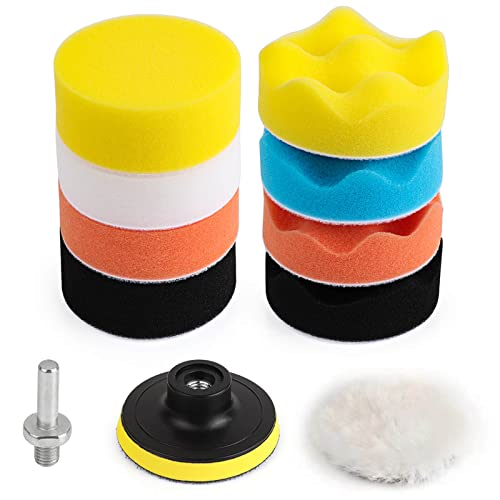
Kshineni 3 Inch Drill Buffing Pad, 11 Pcs Car Foam
- ✓ Durable and thick
- ✓ Easy to change pads
- ✓ Versatile for all details
- ✕ Slightly bulky for tight spots
- ✕ Not suitable for heavy-duty polishing
| Pad Material | Foam sponge and woolen fiber |
| Pad Diameter | 3 inches (76 mm) |
| Number of Pads | 11 pieces (8 sponge, 1 woolen, 1 drill adapter, 1 suction cup) |
| Pad Thickness | Thicker design for durability (exact measurement not specified) |
| Adhesive Type | Self-adhesive with strong reusability |
| Intended Use | Car polishing, waxing, sealing glaze, oxidation removal, scratch polishing |
Right out of the box, I was impressed by how sturdy the Kshineni 3 Inch Drill Buffing Pad set feels. The variety of colors and textures caught my eye immediately, promising versatility for different polishing needs.
As I started testing, I noticed how thick and durable each pad is — they don’t bend or fall apart easily, even after multiple washings. The high-quality woolen buffer pad really shines when tackling stubborn dust and oxidation spots on my car’s surface.
The self-adhesive design makes swapping pads quick and mess-free. I just pressed the woolen buffer onto my drill, and it stayed secure during intense buffing.
Replacing pads in between different areas or types of polishing was effortless and saved me a lot of time.
Using the sponge pads, I could easily reach the finer details, like around the trim and crevices. The softer sponges handled light waxing and sealing glaze perfectly, bringing out a noticeable shine.
The thicker pads helped me cover more surface area without fatigue.
What surprised me most was how well it handled scratches and tough oxidation without damaging the paint. It’s clear that the craftsmanship is solid, and the pads don’t leave swirl marks when used correctly.
Overall, for just under $9, you get a comprehensive kit that makes polishing and waxing straightforward. Whether you’re a beginner or a pro, these pads add convenience and efficiency to your car detailing routine.
What Are the Most Effective Tools for Waxing a Car?
The most effective tools for waxing a car include:
- Wax Applicator Pads: These pads are designed to apply wax evenly without scratching the car’s surface. They are typically made from soft foam or microfiber materials, which help to minimize the risk of swirl marks and ensure a smooth application.
- Dual Action Polisher: A dual action polisher is an electric tool that combines orbital and rotary motion, making it ideal for applying wax quickly and efficiently. It saves time and effort compared to hand application, while also providing a more uniform finish and better results.
- Microfiber Towels: High-quality microfiber towels are essential for buffing off excess wax after application. They are gentle on the car’s surface and highly absorbent, which helps to achieve a streak-free shine while ensuring that no wax residue remains.
- Foam Wax Applicators: These applicators are specifically shaped to fit comfortably in your hand and allow for precise control during waxing. Their soft foam provides a gentle touch on the surface, making it easy to work into tight areas and curves of the vehicle.
- Spray Wax: Spray wax is a convenient option for maintaining the shine of your vehicle between full wax applications. It is easy to apply and can be used on both wet and dry surfaces, making it a versatile tool for quick touch-ups and enhancing gloss.
How Does a Dual Action Polisher Enhance Wax Application?
A dual action polisher is a highly effective tool for enhancing the wax application process on a car’s surface. Unlike traditional methods, which can be labor-intensive and inconsistent, a dual action polisher combines rotary and orbital motions to ensure an even and thorough application of wax. Here are several key benefits:
-
Consistent Coverage: The dual motion helps distribute wax evenly across the car’s surface, reducing the likelihood of missed spots or thick patches.
-
Efficiency: Using a polisher speeds up the waxing process significantly, allowing users to cover larger areas in a shorter amount of time compared to hand application.
-
Reduced Risk of Swirls: The orbital action minimizes the risk of swirling or scratching that can occur when waxing by hand, especially on softer paints.
-
Ease of Use: Many dual action polishers have user-friendly features, such as adjustable speeds, making them accessible for both beginners and experienced detailers.
-
Versatility: In addition to waxing, these tools can also be used for polishing and buffing, making them a multifunctional addition to any detailing toolkit.
Incorporating a dual action polisher into the wax application routine not only simplifies the process but also enhances the overall finish of the vehicle.
What Benefits Do Foam Applicator Pads Offer for Waxing?
Being gentle on surfaces is crucial, especially for those with softer paint finishes, as it helps maintain the integrity of the vehicle’s exterior while still delivering a high-quality shine.
The absorbency of foam ensures that the wax is not just smeared on but properly worked into the surface, allowing for better bonding and protection.
With their ease of use, foam applicator pads are accessible to both seasoned detailers and beginners, simplifying the waxing process for anyone looking to enhance their vehicle’s appearance.
Finally, the versatility of these pads means that they can serve multiple purposes, reducing the need for different tools and streamlining the waxing and detailing process.
What Key Features Should You Consider When Choosing a Waxing Tool?
When selecting the best tool to wax a car, several key features should be considered to ensure effective and efficient application.
- Type of Applicator: The choice between foam, microfiber, or terry cloth applicators can greatly influence the waxing process.
- Size and Shape: The size and shape of the waxing tool can affect maneuverability and ease of use in different areas of the car.
- Durability: The material quality determines how long the tool will last and withstand repeated use without falling apart.
- Ease of Cleaning: A tool that is easy to clean and maintain will save time and enhance the longevity of its usability.
- Compatibility with Wax Types: Ensure that the tool is suitable for the specific wax product you are using, whether it’s liquid, paste, or spray wax.
- Ergonomics: A comfortable grip and design can reduce fatigue during use, especially for larger vehicles.
The type of applicator is crucial as it determines how well the wax is spread and absorbed. Foam applicators are often preferred for their softness and ability to distribute wax evenly, while microfiber options can provide a gentle touch that minimizes the risk of scratches.
The size and shape of the waxing tool should ideally allow you to reach tight spots, such as around door handles and mirrors, without straining your wrist. A larger pad can cover broad areas quickly, but may be cumbersome for detailed work.
Durability is essential because a waxing tool needs to withstand the pressure of application and the chemicals in wax products. High-quality materials will ensure that the tool does not degrade quickly, providing better value over time.
Ease of cleaning is another practical feature, as a tool that’s hard to clean can harbor wax residues and contaminants, making it less effective for future applications. Look for tools that can be machine washed or easily rinsed off.
Compatibility with wax types ensures that you are using the tool correctly and achieving the best results. Some applicators work better with certain wax formulations, so check product specifications before purchasing.
Lastly, ergonomics play a significant role in the comfort of use; a well-designed tool can help you maintain control and reduce strain on your hands and arms, especially during lengthy waxing sessions.
Why is Power Important for Electric Waxing Tools?
The underlying mechanism involves the relationship between power output and the tool’s ability to operate at optimal speeds and temperatures. Electric waxing tools with greater power can maintain stable performance under load, ensuring that the wax is applied uniformly without streaks or uneven patches. Furthermore, higher power allows these tools to effectively break down and spread the wax product, which is essential for achieving a long-lasting protective layer on the vehicle’s surface. This ensures that users can achieve professional results without needing extensive manual effort.
Additionally, the power of the tool can affect its durability and longevity. Tools that operate with higher wattage tend to have robust internal components that can withstand extended use without overheating or malfunctioning. This durability not only enhances the user experience but also provides better value for consumers looking for the best tool to wax their car, as they can rely on their equipment for multiple applications over time.
What Materials Are Ideal for Applicator Pads?
The ideal materials for applicator pads used in car waxing include:
- Microfiber: Microfiber pads are highly effective for waxing due to their soft, plush texture that helps distribute wax evenly across the surface without causing scratches. They are absorbent, allowing for a smooth application and are easy to clean, making them a popular choice among car enthusiasts.
- Foam: Foam pads are lightweight and provide a firm structure that allows for controlled application of wax. They come in various densities, enabling users to choose pads that suit their waxing technique, whether they prefer a more aggressive or gentle approach to waxing.
- Natural Wool: Wool applicator pads are made from sheepskin or synthetic wool and are known for their ability to hold and distribute wax effectively. They create a high-gloss finish and are particularly suitable for larger surfaces, although they may require more care to avoid leaving lint behind.
- Cotton: Cotton pads are highly absorbent and can hold a significant amount of wax, making them suitable for thorough applications. However, they may not provide the same level of scratch resistance as microfiber or foam options, so they should be used with caution on delicate surfaces.
- Latex or Rubber: These materials can be used for specific types of applicators, particularly those designed for buffing or polishing. They offer durability and resistance to wear, but may not provide the soft touch needed for initial wax application.
What Are the Advantages and Disadvantages of Manual vs. Electric Waxing Tools?
| Tool Type | Advantages | Disadvantages |
|---|---|---|
| Manual Waxing Tools | Cost-effective, easy to control, no need for power sources, durable and easy to maintain, portable and easy to store, minimal skill required for basic use. | Time-consuming, requires more physical effort, inconsistent results, may require more skill for best results, can be cumbersome to store if not compact. |
| Electric Waxing Tools | Faster application, consistent results, less physical effort required, durable with proper maintenance, often designed for easy storage, generally requires less skill for effective use. | Higher cost, requires charging or power source, can be heavy, may need regular maintenance, less portable due to weight and power requirements. |
Which Waxing Tools Are Recommended by Professionals?
Professionals often recommend a variety of tools for waxing cars to ensure a smooth and effective finish.
- Dual Action Polisher: This tool is essential for applying wax evenly and efficiently.
- Foam Applicator Pads: These pads provide a gentle surface that helps to spread wax without scratching the paint.
- Microfiber Towels: Ideal for buffing off excess wax, these towels are soft and non-abrasive.
- Detailing Brushes: These brushes are great for getting into hard-to-reach areas and ensuring every bit of the car is waxed properly.
- Spray Wax Applicator: This tool allows for quick application of spray wax for touch-ups or maintenance between full waxes.
The dual action polisher is favored by professionals for its ability to both polish and wax effectively, minimizing the risk of swirl marks while providing an even coat of wax. It also saves time and effort compared to manual application.
Foam applicator pads are recommended because they are designed to hold and distribute wax evenly across the car’s surface, ensuring thorough coverage without damaging the paint. Their soft texture helps prevent scratches.
Microfiber towels are essential for removing excess wax after application, as they are highly absorbent and gentle on the car’s finish, preventing any potential for scratching or swirls. Using a clean towel also helps achieve a high-gloss shine.
Detailing brushes are particularly useful for waxing intricate parts of the car, such as around trim or in tight spaces where larger tools cannot reach. They allow for precise application and help ensure that every area of the vehicle receives attention.
The spray wax applicator is perfect for quick applications and maintenance, allowing for an easy and fast way to refresh the car’s shine between full wax jobs. This tool is beneficial for those looking to maintain their vehicle’s appearance with minimal effort.
What Tools Should Beginners Consider for Waxing?
Beginners looking to wax their cars should consider a few essential tools to achieve a professional-looking finish.
- Foam Applicator Pads: These pads are ideal for applying wax evenly without scratching the car’s surface. Their soft texture allows for a smooth application, ensuring that wax is spread thinly and uniformly, which helps in achieving a glossy finish.
- Microfiber Towels: High-quality microfiber towels are essential for buffing off the wax after application. They are designed to trap wax particles without leaving lint or scratches, making them perfect for achieving a streak-free shine.
- Electric Waxing Machine: An electric waxing machine can save time and provide consistent results, especially for larger vehicles. These machines help to evenly distribute wax and can reduce the physical effort required compared to manual application.
- Car Wash Soap: Before waxing, it’s important to clean the car properly, and a pH-balanced car wash soap is crucial for this. Using the right soap ensures that all dirt and grime are removed without stripping away any existing wax.
- Clay Bar: A clay bar is useful for removing contaminants from the car’s surface before waxing. It helps to ensure that the wax adheres properly and the finish is smooth, enhancing the overall shine and longevity of the wax job.
- Wax Selection: Choosing the right type of wax, whether paste, liquid, or spray, is important based on personal preference and the car’s finish. Each type has its own benefits, such as ease of application or durability, and understanding these can help beginners make the best choice for their specific needs.
How Can You Properly Maintain Waxing Tools for Optimal Performance?
Proper maintenance of waxing tools is essential for achieving the best results when waxing a car.
- Regular Cleaning: After each use, it’s important to clean your waxing tools thoroughly to remove any leftover wax, dirt, or debris. Use a gentle soap and water solution or a specialized cleaner to ensure that the surfaces remain free from contaminants that can affect performance during your next waxing session.
- Inspect for Wear and Tear: Regularly check your waxing pads, applicators, and machines for signs of wear, such as fraying edges or hardening of materials. Worn-out tools can lead to uneven application and subpar results, so replace any damaged items promptly to maintain optimal performance.
- Proper Storage: Store your waxing tools in a cool, dry place away from direct sunlight and extreme temperatures. Keeping them in a designated storage container can prevent dust accumulation and damage, ensuring that they remain in good condition for future use.
- Use Appropriate Products: Always use waxes and cleaners that are recommended for your specific tools. Using incompatible products can degrade the materials of your tools, leading to reduced effectiveness and longevity.
- Periodic Replacement: Even with good maintenance, waxing tools have a lifespan and should be replaced periodically. For instance, foam pads may become less effective after numerous uses, so keeping track of their condition and replacing them when needed will ensure consistent results.