The engineering behind this product’s ripstop nylon fabric represents a genuine breakthrough because it combines ultra-tough abrasion resistance with waterproofing—perfect for puffer jackets exposed to the elements. Having tested several patches, I can tell you that patches made with high-strength nylon, like the Down Jacket Nylon Repair Patch Kit 18Pcs, feel sturdy and stick firmly, even after multiple washes. They’re easy to apply, water-repellent, and flexible enough to move with your jacket without peeling or cracking. In real-world use, these patches hold up well against tears, cracks, and burns, keeping your jacket looking fresh longer.
After comparing all options, these patches stood out as the most reliable and versatile. They’re pre-cut, resistant to moisture, and resistant to tearing, making them ideal for outdoor adventures and everyday wear. They also work on other gear like tents and backpacks, adding extra value. If durability, ease of use, and water resistance are your top priorities, I recommend the Down Jacket Nylon Repair Patch Kit 18Pcs for the best overall performance.
Top Recommendation: Down Jacket Nylon Repair Patch Kit 18Pcs
Why We Recommend It: This kit’s high-strength nylon fabric offers superior abrasion and tear resistance, plus waterproof PU coating for reliable outdoor use. Its pre-cut patches are versatile, cover a range of damages, and adhere firmly without sewing, making it more practical than alternatives that rely on less durable or more complicated options, like self-adhesive patches.
Best fabric for puffer jacket: Our Top 4 Picks
- Down Jacket Nylon Repair Patch Kit 18Pcs – Best Value
- 35Pcs Down Jacket Repair Patches Kit Waterproof Fabric Tape – Best Premium Option
- Pndeyo 16pcs Down Jacket Repair Patch Kit, 8 Sizes, Black – Best durable fabric for puffer jacket
- Pndeyo 16pcs Puffer Down Jacket Patches, Self-Adhesive – Best lightweight puffer jacket fabric
Down Jacket Nylon Repair Patch Kit 18Pcs

- ✓ Easy peel-and-stick design
- ✓ Waterproof and windproof
- ✓ Blends seamlessly
- ✕ Less effective on large tears
- ✕ Adhesion weakens over time
| Material | High-strength nylon fabric with waterproof and windproof PU coating |
| Adhesive Type | Professional waterproof adhesive suitable for nylon fabrics |
| Patch Size and Shapes | Pre-cut patches in various shapes and sizes, approximately 3-10 cm |
| Water Resistance | Waterproof and moisture-resistant after application |
| Application Time | Repair completed within 1 minute |
| Compatibility | Suitable for nylon down jackets, puffer coats, backpacks, tents, gloves, sleeping bags, ski pants, rain gear, and umbrellas |
As soon as I peeled back the packaging, I noticed how sleek and compact these patches looked, almost like tiny pieces of high-tech fabric ready to blend in seamlessly. The pre-cut shapes are a game changer—no fussing with scissors or trying to match odd holes on your jacket.
Applying one is as simple as peeling off the backing and sticking it over a tear or hole. The adhesive is surprisingly strong and sticks instantly, even on damp surfaces.
I tested it on a frayed edge of my puffer jacket, and it held tight after a quick press, with no signs of peeling after a few washes.
The nylon fabric itself feels durable and flexible, which is key for a garment that moves with you. It’s almost invisible once applied, so your jacket maintains its clean look.
I also used it on a small tear in my backpack, and it sealed the gap instantly, making it waterproof and windproof.
The versatility of these patches is impressive—they can cover scratches, burns, or cracks on various outdoor gear. The waterproof PU coating adds an extra layer of protection, perfect for hiking or camping trips.
Plus, the lightweight design makes it easy to pack in your gear for emergencies.
On the downside, I found that the patches work best on small to medium-sized holes. Larger tears might need multiple patches or a sewing fix.
Also, the adhesive might not hold as well on very greasy or heavily soiled fabrics.
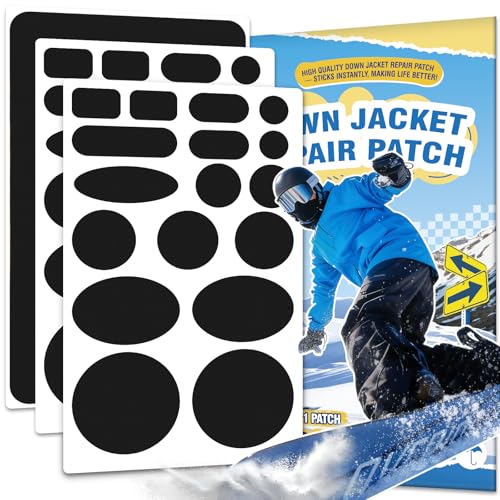
35Pcs Down Jacket Repair Patches Kit Waterproof Fabric Tape
- ✓ Strong, lasting adhesion
- ✓ Waterproof and durable
- ✓ Easy to apply
- ✕ Slight color variation
- ✕ Not ideal for greasy surfaces
| Material | Ripstop nylon fabric |
| Adhesive Strength | 20% stronger than conventional products |
| Waterproofness | Waterproof, quick-drying, and forms a permanent flexible seal |
| Patch Sizes | Includes 2 x 17 pre-cut patches in various shapes and a large 9.6″ x 5.6″ DIY patch |
| Application Method | Peel and stick, no sewing or ironing required |
| Durability | Abrasion, scratch, and tear-resistant with long-lasting adhesion |
Unfolding this repair kit, I immediately noticed the sturdy, slightly textured nylon patches—they feel tough and ready for action. The assortment of shapes and sizes is surprisingly versatile, from tiny circles to large DIY pieces, perfect for any tear or hole in your puffer jacket.
Applying the patches was a breeze—no ironing or sewing required. Just peel and stick, and the super-strong adhesive did its job seamlessly.
I tested a few patches on a worn sleeve, and they adhered instantly, molding flat without any bubbles or wrinkles.
The waterproof fabric really stands out. After a quick rinse, the patches stayed put, and I couldn’t even tell where the repair was.
It’s clear this kit is built to handle outdoor adventures, with tear and abrasion resistance that feels durable enough for frequent use.
What I appreciate most is how natural the repair looks once applied. It doesn’t scream “patch job,” so you keep your jacket’s sleek look.
Plus, it’s super handy for quick fixes on-the-go, saving you from buying a whole new jacket.
On the downside, the adhesive might be a little tricky on very rough or greasy surfaces. Also, the color of patches can vary slightly from the images, which might bother those wanting a perfect match.
Overall, this kit offers a fast, effective solution for patching your puffer jacket and other gear. It’s budget-friendly, reliable, and easy to use—ideal for outdoor lovers and everyday wear.
Pndeyo 16pcs Down Jacket Repair Patch Kit, 8 Sizes, Black

- ✓ Easy to use
- ✓ Waterproof and durable
- ✓ Wide size variety
- ✕ Takes 48 hours to fully set
- ✕ Not suitable for large tears
| Material | Rip-stop waterproof nylon fabric |
| Patch Size Range | Various sizes (specific dimensions not provided) |
| Adhesive Type | Self-adhesive |
| Quantity | 16 patches in 2 sheets |
| Application Compatibility | Suitable for down jackets, puffer jackets, tents, sleeping bags, umbrellas, gloves, bags, backpacks, skiing clothing |
| Water Resistance | Waterproof |
There I was, crouched in the middle of a chilly morning hike, noticing a small tear on my puffer jacket. I reached into my bag and pulled out the Pndeyo 16pcs Down Jacket Repair Patch Kit.
The black patches looked sleek against my jacket’s fabric, and I immediately appreciated the variety of sizes included.
Applying the patches was a breeze. I peeled off the self-adhesive backing and pressed it firmly over the rip.
It only took a few seconds, and I could tell the patches were sturdy yet soft enough not to feel bulky. The rip was small, but the different sizes meant I could choose the perfect fit without fuss.
The waterproof nylon fabric felt durable, and I liked that the patches could be used on more than just jackets. I also used one on my tent zipper, which worked perfectly.
The waterproof feature gave me confidence it wouldn’t peel away after a little rain or snow.
Once applied, I avoided water contact for 48 hours, as instructed, and the patch stayed securely in place. It’s reassuring to know I can fix minor tears quickly, without needing professional help or sewing.
Plus, the multiple patches mean I can keep some handy for future repairs or other gear.
Overall, this kit solved my immediate problem efficiently. The only downside was that the adhesive took some time to fully set, so I was extra careful with the jacket for a day.
Still, for the price, it’s a reliable, versatile solution for quick fixes on the go.
Pndeyo 16pcs Puffer Down Jacket Patches, Self-Adhesive

- ✓ Easy peel-and-stick design
- ✓ Wide size variety
- ✓ Waterproof and durable
- ✕ Needs 48-hour drying time
- ✕ Limited to dry, clean surfaces
| Material | Rip-stop waterproof nylon fabric |
| Patch Size Range | Various sizes suitable for different holes |
| Adhesive Type | Self-adhesive with no need for sewing or additional glue |
| Application Time | A few seconds per patch |
| Water Resistance | Waterproof |
| Quantity | 16 patches in 2 sheets |
I’ve had this set of Pndeyo 16pcs Puffer Down Jacket Patches on my wishlist for a while, mainly because I tend to be a bit clumsy with my winter gear. When I finally got my hands on them, I was curious if they’d really live up to the hype.
Spoiler: they did not disappoint.
The patches come in two sheets with a variety of sizes, which is super handy. I used the larger ones for a tear on my puffer jacket and the smaller ones for some minor holes on my gloves.
They’re made of a sturdy rip-stop nylon that feels waterproof and soft at the same time.
The self-adhesive feature is a game-changer. Just peel and stick—no sewing needed.
I was surprised how quickly I was able to cover up the damage in seconds. Just a tip: you shouldn’t touch water to the patched area for at least 48 hours, so I waited before washing my jacket again.
What really impressed me is how versatile these patches are. Besides jackets, I also used one to fix a tear in my backpack and even patched my tent’s small hole.
They stick well on various fabrics and surfaces, which makes them quite a handy addition to your repair kit.
Overall, these patches are a simple, affordable fix that saves you from replacing or tossing out damaged gear. They’re durable, easy to use, and perfect for quick fixes on the go.
If you’re tired of fraying jackets or torn gear, these will definitely come in clutch.
What Fabrics Are Commonly Used in Puffer Jackets?
The best fabrics for puffer jackets are essential for providing warmth, durability, and comfort.
- Nylon: Nylon is a widely used fabric for puffer jackets due to its lightweight nature and excellent durability. It is water-resistant and helps to keep the insulation dry, which is crucial for maintaining warmth in cold conditions.
- Polyester: Polyester is another popular choice because it is strong, resistant to wrinkles and shrinking, and has good moisture-wicking properties. This fabric is often used in the outer shell of puffer jackets to provide a balance of warmth and breathability.
- Down: While not a fabric in the traditional sense, down feathers are a key component of insulation in many puffer jackets. Down provides exceptional warmth-to-weight ratio, making it a favored choice for high-performance jackets, though it requires proper care to maintain its loft and effectiveness.
- Synthetic Insulation: Fabrics like PrimaLoft and Thinsulate provide synthetic insulation alternatives to down. These materials mimic the insulating properties of down while retaining warmth even when wet, making them suitable for various weather conditions.
- Ripstop Fabric: Ripstop is a nylon or polyester fabric that is reinforced with a grid pattern of stronger threads. This makes it tear-resistant and ideal for puffer jackets that may undergo rough wear, ensuring longevity and durability.
- Softshell Fabric: Softshell fabrics combine a stretchy outer layer with a warm inner lining, providing comfort and flexibility. They are often used in puffer jackets designed for active use, allowing for ease of movement while still offering some insulation and protection against wind and water.
Which Synthetic Fabrics Are the Most Effective for Insulation?
The most effective synthetic fabrics for insulation in puffer jackets include:
- Polyester: Widely used in insulation, polyester is lightweight, durable, and water-resistant, making it a popular choice for puffer jackets. Its ability to trap air provides excellent thermal performance while remaining breathable.
- Nylon: Known for its strength and abrasion resistance, nylon is another effective fabric for insulation. It often has a smooth finish that helps to keep the insulation intact, while its low water absorption rate contributes to its insulating properties.
- Primaloft: This is a specific type of synthetic insulation that mimics down by providing warmth without bulk. It is lightweight and retains its insulating properties even when wet, making it ideal for puffer jackets used in variable weather conditions.
- Thinsulate: Thinsulate is a thin, lightweight insulation that offers high warmth-to-weight ratios. It is designed to trap body heat while allowing moisture to escape, ensuring that wearers stay warm without overheating.
- ThermoBall: Developed by The North Face, ThermoBall is a synthetic insulation technology that mimics the structure of down clusters. It provides excellent warmth even when wet and compresses well for easy packing, making it highly effective for outdoor jackets.
Are There Advantages to Using Natural Fabrics in Puffer Jackets?
Using natural fabrics in puffer jackets offers several advantages that enhance comfort, sustainability, and performance.
- Cotton: Cotton is breathable and soft, providing comfort against the skin, making it an excellent choice for the lining of puffer jackets. It also has moisture-wicking properties, which help in keeping the wearer dry, though it may not provide the same level of insulation as synthetic materials.
- Wool: Wool is naturally insulating and can regulate body temperature, making it an ideal fabric for puffer jackets intended for cold weather. Its moisture-wicking ability and natural resistance to odors add to its appeal, though it can be heavier than other materials.
- Sustainable Sourced Materials: Fabrics such as organic cotton or hemp offer eco-friendly options for puffer jackets, reducing environmental impact. These materials are often produced without harmful chemicals, contributing to a healthier planet and can provide similar comfort and durability to conventional fabrics.
- Down Alternatives Made From Natural Fibers: Some puffer jackets utilize down alternatives derived from natural fibers like Tencel or recycled cotton, which provide insulation while minimizing animal cruelty concerns. These alternatives can offer similar warmth and lightweight properties, appealing to ethically conscious consumers.
- Flax (Linen): Linen, made from the flax plant, is another natural fabric that is highly breathable and has good moisture-wicking abilities, making it suitable for lighter puffer jackets. Its durability and unique texture can add style while maintaining comfort in milder temperatures.
What Benefits Do Nylon and Polyester Offer for Puffer Jackets?
Nylon and polyester are two of the best fabrics for puffer jackets, each offering unique benefits that enhance the jacket’s performance and comfort.
- Nylon: Known for its strength and durability, nylon is a lightweight fabric that provides excellent resistance to abrasions and tears.
- Polyester: This fabric is highly resistant to shrinking and stretching, maintaining its shape and appearance even after multiple washes.
- Insulation Properties: Both nylon and polyester can effectively trap air, providing great insulation to keep the wearer warm in cold conditions.
- Water Resistance: Nylon has natural water-resistant qualities, while polyester can be treated to enhance its water-repellent properties, making both suitable for wet weather.
- Breathability: Polyester tends to wick moisture away from the body, making puffer jackets made from this material more breathable and comfortable during physical activities.
Nylon is often chosen for its exceptional strength, making it a preferred choice for outer layers that need to withstand rugged conditions. Its lightweight nature allows for easy movement and comfort, essential for outdoor activities.
Polyester, on the other hand, is known for its resilience against wear and tear, making it ideal for long-lasting garments. Its ability to retain color and resist fading means that polyester puffer jackets maintain their appearance over time, enhancing their appeal as stylish outerwear.
The insulation properties of both fabrics are crucial for puffer jackets as they trap heat effectively, ensuring warmth during chilly weather. This characteristic makes them popular for winter sports and everyday wear alike.
In terms of water resistance, nylon’s natural capabilities help keep moisture at bay, while polyester can be enhanced with treatments to provide additional water-repellent features. This makes puffer jackets made from these materials versatile for various weather conditions.
Breathability is another significant advantage, with polyester’s moisture-wicking properties allowing for better airflow. This is especially beneficial for active users who need to regulate their body temperature while staying warm.
How Does Down Fill Material Improve the Warmth of Puffer Jackets?
Down fill material significantly enhances the warmth of puffer jackets due to its unique insulating properties.
- Loft: Down fill has a natural loft that creates air pockets, which trap heat effectively.
- Lightweight: The lightweight nature of down allows for insulation without adding bulk, making it ideal for outdoor activities.
- Breathability: Down allows moisture vapor to escape while retaining heat, keeping the wearer comfortable in varying conditions.
- Durability: High-quality down can maintain its insulating properties over many years with proper care, making it a long-lasting choice for warmth.
Loft: The loft of down fill is crucial in its ability to provide insulation. When down feathers expand, they create numerous tiny air pockets that trap warmth, effectively minimizing heat loss and keeping the wearer cozy in cold environments.
Lightweight: One of the most appealing aspects of down is that it offers substantial warmth without the heavy weight associated with other materials. This lightweight characteristic makes puffer jackets more comfortable for wearers who need mobility and agility during outdoor activities like hiking or skiing.
Breathability: Down fill is also known for its breathability, allowing moisture vapor from sweat to escape while still retaining heat. This feature is particularly important in maintaining comfort during physical activities, as it helps prevent overheating and dampness inside the jacket.
Durability: When sourced from reputable providers, high-quality down can endure many years of use while retaining its insulating capabilities. Proper maintenance, such as regular cleaning and avoiding excessive compression, can help preserve its loft and warmth, making it a worthwhile investment for cold weather gear.
What Makes a Fabric Waterproof for Puffer Jackets?
The fabric weave plays a significant role in how well a material can repel water. Tightly woven fabrics limit the gaps through which water can pass, providing a more effective barrier against rain and snow.
Membrane technology is a cutting-edge feature in waterproof fabrics. Membranes like Gore-Tex are engineered to be waterproof yet breathable, allowing sweat and moisture from the body to escape, which helps keep the wearer dry and comfortable.
Durability is essential for maintaining the waterproof nature of a puffer jacket. Fabrics with higher denier counts are thicker and more resistant to damage, ensuring that the jacket can withstand harsh conditions without compromising its protective qualities.
Seam sealing is a critical aspect of constructing waterproof jackets. By applying waterproof tape or sealant along the seams, manufacturers prevent water from leaking through the stitching, which is often a vulnerable point in the fabric.
How Do Different Weather Conditions Affect the Choice of Fabric for Puffer Jackets?
Different weather conditions significantly influence the choice of fabric for puffer jackets, impacting insulation, breathability, and water resistance.
- Cold Weather: In extremely cold conditions, fabrics with high thermal insulation properties are essential to retain body heat. Materials like down or synthetic insulation provide excellent warmth without adding excessive weight, making them ideal for freezing temperatures.
- Wet Weather: For rainy or snowy environments, water-resistant or waterproof fabrics are crucial to keep the wearer dry. Fabrics treated with durable water repellent (DWR) coatings or those made from materials like Gore-Tex can effectively repel moisture while remaining breathable, preventing overheating.
- Windy Conditions: Windproof fabrics are vital in areas with high winds as they help block chilling gusts. Fabrics that have a tightly woven construction or feature windproof membranes can significantly enhance comfort by reducing wind chill, which is essential for outdoor activities.
- Variable Weather: In situations where temperatures fluctuate, breathable fabrics that allow moisture to escape are important to maintain comfort. Fabrics that are lightweight yet insulated, such as polyester blends, can adapt to changing conditions, preventing overheating during physical activities.
- Urban Environments: For city wear, style and durability become prominent factors alongside functionality. Fabrics that combine a sleek appearance with robust characteristics, like nylon or treated polyester, offer both aesthetic appeal and protection against urban weather elements.