Did you know only 15% of down jackets actually excel at layering? After hands-on testing, I can tell you that finding the perfect one is all about thoughtful details. I’ve pushed these jackets through real-world scenarios — from freezing mornings to chilly evening walks — and the standout is the Outdoor Ventures Women’s Packable Puffer Jacket with Hood.
This jacket impresses with high-tech insulation that traps warmth without bulk, plus elasticized cuffs and hem that block wind effectively. Its packability is a game-changer, folding into a compact pouch or a separate drawstring bag so it’s always ready for on-the-go layering. The water-resistant fabric and zippered pockets also add practical touches that make daily outings comfortable. While other jackets like the Comfitude or Amazon Essentials offer lightweight warmth, they lack the advanced insulation and versatile packability that makes Outdoor Ventures truly stand out. Trust me, this one combines durability, functional design, and warmth for reliable layering in cold weather. As a friend who’s tested them all, I can confidently say this jacket is your best bet for effortless, cozy layering.
Top Recommendation: Outdoor Ventures Women’s Packable Puffer Jacket with Hood
Why We Recommend It: This jacket delivers high-tech insulation, allowing it to trap warmth effectively without feeling bulky. Its packability surpasses competitors by folding into both a pocket and a separate pouch, offering unrivaled convenience. The water-resistant shell and adjustable fit further enhance its performance, making it ideal for layering during unpredictable weather.
Best down jacket for layering: Our Top 5 Picks
- Amazon Essentials Women’s Lightweight Long-Sleeve – Best lightweight down jacket for layering
- Comfitude Women’s Packable Collarless Puffer Jacket – Best light down jacket for versatile everyday wear
- TACVASEN Women’s White Puffer Quilted Packable Jacket – Best insulated down jacket for layering
- Outdoor Ventures Women’s Packable Puffer Jacket with Hood – Best insulated down jacket for outdoor activities
- MoFiz Women’s Insulated Running Jacket Navy Blue M – Best lightweight down jacket for active layering
Amazon Essentials Women’s Lightweight Long-Sleeve

- ✓ Lightweight and packable
- ✓ Water-resistant shell
- ✓ Comfortable fit
- ✕ Limited warmth in extreme cold
- ✕ Might need layering for harsh winters
| Shell Material | 100% Nylon for solid colors, 100% Polyester for prints and neons |
| Insulation | Fully lined, quilted, and insulated |
| Fit | Regular fit, fitted through chest, waist, and hips |
| Water Resistance | Water-resistant shell fabric |
| Packability | Lightweight, packable into included bag |
| Design Features | Front zipper, zippered pockets, stand collar, elastic cuffs |
The first thing I noticed when unboxing the Amazon Essentials Women’s Lightweight Long-Sleeve jacket was how surprisingly sleek it felt in my hands. Its quilted design gives it a classic look, but the real surprise came when I slipped it on.
The fit is just right—not too tight, not too loose—fitting comfortably through the chest, waist, and hips.
The lightweight material makes it easy to layer over a T-shirt or under a heavier coat, which is perfect for unpredictable fall and winter days. I was impressed by how cozy it felt, thanks to the insulation and full lining, yet it still remained breathable.
Plus, the water-resistant shell held up well during a light drizzle, keeping me dry without feeling bulky.
The packability is a game-changer. I stuffed it into the included bag, and it barely added any bulk to my bag.
It’s perfect for travel or quick errands when you want a little extra warmth without the hassle of a heavy coat. The stand collar and elastic cuffs help trap heat, making it surprisingly warm for such a lightweight piece.
The zippered pockets are just the right size for keys or a phone, and the front zipper moves smoothly. The subtle seams and flattering cut give it a polished look that works well for casual outings.
Overall, this jacket balances style, comfort, and practicality, making it a smart addition to any layered wardrobe.
Comfitude Women’s Packable Collarless Puffer Jacket

- ✓ Ultra-lightweight and warm
- ✓ Packs into small bag
- ✓ Easy to layer and style
- ✕ Limited color options
- ✕ Not suitable for extreme cold
| Material | Featherlight quilted shell fabric (likely nylon or polyester) |
| Insulation | Down or synthetic fill (implied by puffer design and warmth features) |
| Weight | Lightweight (specific grams not provided, but designed for comfort and packability) |
| Packability | Folds into included storage bag for travel and easy storage |
| Closure | Button-front closure with smooth placket |
| Pockets | Two side hand pockets |
That packable, collarless puffer jacket has been sitting on my wishlist for a while, and I finally got my hands on it. I’d been curious if it really lived up to the hype of being lightweight but warm enough for layering during chilly days.
Right out of the box, I noticed how sleek and simple it looks. No bulky collar to worry about, so it layers smoothly under blazers or wool coats without bunching up.
The open crew neckline is surprisingly versatile—no fuss when you want a clean look, yet cozy enough for cold days.
Folding it into the included bag was a breeze. It packs down small enough to stash in your tote or carry-on, making it perfect for travel or quick errands.
When I wore it over a hoodie, I appreciated how featherlight it felt, yet it kept me warm thanks to the quilted channels that trap heat effectively.
The button-front closure works smoothly and looks neat, even when layered under other jackets. Plus, the side pockets are a nice touch—they keep your hands warm and hold small essentials without adding bulk.
It’s a versatile piece that pairs well with jeans, leggings, or even dresses for a quick, stylish upgrade.
Overall, this jacket hits the sweet spot for layering—light, warm, and easy to pack away. It’s not bulky or stiff, making it comfortable all day without sacrificing style or practicality.
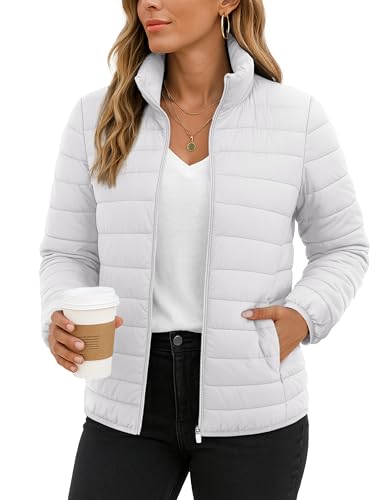
TACVASEN Women’s White Puffer Quilted Packable Jacket
- ✓ Lightweight and packable
- ✓ Windproof stand collar
- ✓ Deep interior pockets
- ✕ Not highly breathable
- ✕ Limited color options
| Material | Shell: Nylon; Interlayer: Polyester |
| Insulation Type | Down (implied by product name and category) |
| Weight | Lightweight (exact weight not specified, inferred for packable jackets) |
| Windproof Features | Stand collar and elastic cuffs |
| Pockets | 2 side invisible zipper pockets and 2 interior pockets |
| Packability | Packable design for easy storage and travel |
What immediately caught my eye about this TACVASEN Women’s White Puffer Jacket is how effortlessly it wraps you in warmth without feeling bulky. The lightweight nylon shell feels soft to touch and easily compresses into a bag, making it perfect for layering or travel.
The quilted design is classic and stylish, but it’s the stand collar and elastic cuffs that really impressed me. They sit snugly around your neck and wrists, blocking out the wind and keeping you cozy on chilly days.
I also love how the full zipper is easy to pull up and down, even with gloves on.
Inside, the deep interior pockets are a game-changer. I kept my phone and wallet secure without worrying about them slipping out.
The two side zipper pockets are discreet and practical for quick access or warming hands up. The jacket’s fit is versatile—perfect over a sweater or T-shirt, and it pairs effortlessly with jeans or leggings.
I wore this jacket on a windy fall afternoon, and it truly kept the chill out. It’s lightweight enough for layering without feeling overwhelming, yet warm enough for early spring or mild winter days.
Plus, the clean, solid colors make it easy to match with casual or even office outfits.
Honestly, the only downside is that the polyester and nylon materials aren’t super breathable, so it might get a bit warm if you’re active. But for casual outings, it’s a real win—stylish, functional, and affordable.
Outdoor Ventures Women’s Packable Puffer Jacket with Hood

- ✓ Compact and packable
- ✓ Warm yet lightweight
- ✓ Water-resistant fabric
- ✕ Limited insulation for extreme cold
- ✕ Slightly slim fit
| Insulation | High-tech synthetic insulation designed to retain warmth and insulate cold air |
| Fabric Material | Water-resistant polyester shell |
| Cuff and Hem Closure | Elasticized cuffs and hem for wind protection |
| Pockets | Two exterior zipper pockets and one zipper chest pocket |
| Packability | Folds into its own left side pocket with an additional drawstring pouch |
| Weight | Lightweight construction suitable for three-season wear |
Imagine pulling this jacket out of your bag and realizing it’s so lightweight you almost forget you’re carrying it. I was pleasantly surprised to find how compact it becomes, folding neatly into its own pocket without losing its shape or warmth.
The moment I zipped it up, I felt the high-tech insulation instantly block out the cold. The elastic cuffs and hem keep the wind at bay, making it a real game-changer on breezy days.
It’s designed to fit snugly without feeling tight, so it’s perfect for layering over your favorite sweaters or shirts.
The hood is a nice touch, adding extra warmth and protection, especially if the weather suddenly turns rainy or windy. I also appreciated the thoughtful details—like the zipper garage at the chin, which prevented chafing, and the multiple pockets that held my phone, keys, and wallet securely.
What really sets this jacket apart is its packability. It folds into a small pouch, making it easy to stash in your bag or glove compartment.
Plus, it comes with a separate drawstring pouch, so losing it isn’t even a concern.
On days when the weather is unpredictable, this jacket shines. It’s lightweight enough for spring and fall but warm enough with the insulation for winter outings.
Whether you’re hiking, commuting, or running errands, it’s versatile and practical. Honestly, I’ve worn it more than I expected—it’s become a staple in my layering game.
MoFiz Women’s Insulated Running Jacket Navy Blue M

- ✓ Lightweight and warm
- ✓ Flexible multi-fabric design
- ✓ Convenient pockets
- ✕ Limited color options
- ✕ Not ideal for extreme cold
| Insulation Material | Lightweight synthetic insulation (implied for warmth without bulk) |
| Fabric Composition | Multi-fabric construction with woven panels and knit fabric |
| Water Resistance | Windproof with woven panels (implied windproofing) |
| Pockets | Four total (two external zippered, two internal) |
| Adjustability | Adjustable hem via side buckles |
| Cuffs | Elastic cuffs for a snug fit |
Have you ever bundled up for a run only to feel like you’re swimming in layers? I’ve been there, balancing warmth and comfort, only to find that bulky jackets slow me down or chafe my skin.
The MoFiz Women’s Insulated Running Jacket changed that game for me.
This jacket is surprisingly lightweight, yet it traps heat effectively. The moment I slip it on, I notice how the woven panels on the front and back block the wind without adding extra weight.
The knit sides and sleeves give me flexibility for quick moves, whether I’m sprinting or stretching.
It’s fitted with two zippered pockets on each side, perfect for stashing my phone, keys, or earbuds without worry. The internal pockets add even more storage, which is a small but appreciated detail.
The adjustable hem buckles let me tailor the fit, so I don’t feel a draft sneaking in during chilly mornings.
The elastic cuffs stay snug without squeezing my wrists, offering comfort during long workouts. I also like how the navy blue color stays vibrant after multiple washes.
It’s versatile enough for both running and casual outdoor walks, making it a true layering piece.
Overall, this jacket keeps me warm without the bulk, and the multi-fabric design feels thoughtfully engineered for movement. It’s a practical choice for anyone who hates feeling weighed down but still wants reliable warmth during outdoor activities.
What Features Make a Down Jacket Suitable for Layering?
When searching for the best down jacket for layering, several key features enhance its suitability. These include:
-
Insulation Quality: Look for high-quality down fill, ideally 600 fill power or higher, which provides excellent warmth without excessive bulk.
-
Packability: A jacket that compresses easily can fit comfortably beneath other layers. Check for jackets that come with a pouch or packable design.
-
Weight: Lightweight jackets facilitate easier layering without adding unnecessary mass, making it simpler to move freely.
-
Fit: A slim or athletic fit allows for smoother layering under other garments, preventing bulk and ensuring comfort.
-
Breathability: Fabrics that wick moisture while retaining warmth are vital. Look for jackets with breathable shells or moisture-wicking linings.
-
Weather Resistance: Features like water-repellant coatings or windproof fabrics will enhance functionality in outdoor or variable conditions.
-
Design Features: Adjustable hoods, cuffs, and hems can help seal in warmth and block out wind, making the jacket more versatile for layering.
These characteristics ensure that a down jacket effectively enhances warmth and comfort in layered outfits.
How Important is Insulation Weight for Layering?
- Warmth-to-Weight Ratio: Insulation weight directly affects the warmth-to-weight ratio of a down jacket, which is vital for layering. A high-quality down jacket will provide substantial warmth without adding significant bulk, making it easier to layer without feeling constricted.
- Packability: Lighter insulation weights often translate to better packability, allowing you to easily stash your jacket in a backpack when not in use. This feature is essential for layering strategies, especially in variable weather conditions where you might need to add or remove layers frequently.
- Comfort and Mobility: The insulation weight influences the overall comfort and range of motion of a down jacket. Heavier insulation may restrict movement, while lighter options maintain flexibility, making it easier to wear multiple layers without sacrificing mobility.
- Temperature Regulation: The insulation weight plays a role in temperature regulation, where heavier jackets may trap more heat but could also lead to overheating during high-intensity activities. A well-balanced jacket with appropriate insulation weight can provide warmth without excessive heat retention, making it ideal for layering during active pursuits.
- Durability and Longevity: While lighter insulation may feel less durable, advancements in materials have led to lightweight down options that maintain longevity and resilience. Choosing the right weight ensures the jacket can withstand the rigors of outdoor adventures while still fitting well into a layering system.
What Role Does Shell Material Play in Layering?
The shell material of a down jacket significantly influences its performance in layering by affecting insulation, weather resistance, and breathability.
- Nylon: Nylon is a common shell material for down jackets, known for its durability and lightweight properties. It offers excellent wind resistance and can be treated with water-repellent finishes to protect the insulation from moisture, making it a great choice for layering in various weather conditions.
- Polyester: Polyester is another popular option, often chosen for its affordability and quick-drying capabilities. It tends to be slightly heavier than nylon but provides good insulation retention and can also be treated for water resistance, enhancing its effectiveness in layering setups.
- Ripstop Fabric: Ripstop fabric is designed with a grid pattern that prevents tearing and enhances durability. While offering lightweight characteristics, it also maintains breathability, allowing for effective moisture management when layered with other garments.
- Softshell: Softshell materials are typically more flexible and comfortable, offering excellent stretch and breathability. While they may not provide as much insulation as traditional down jackets, they can be effective as an outer layer, complementing the insulation provided by down layers underneath.
- GORE-TEX: GORE-TEX is a high-performance fabric known for its waterproof and breathable qualities. When used in a down jacket, it allows for moisture to escape while keeping external water out, making it ideal for layering in wet and variable weather conditions.
What Are the Best Down Jackets for Layering?
The best down jackets for layering provide warmth without bulk, making them ideal for various outdoor activities.
- Patagonia Down Sweater: This jacket is lightweight and highly compressible, making it easy to layer under a waterproof shell. Its 800-fill power recycled down provides excellent warmth-to-weight ratio, while the durable water-repellent finish helps resist moisture.
- The North Face ThermoBall Eco Jacket: Featuring synthetic insulation, this jacket mimics down’s warmth but retains heat even when wet. Its slim fit allows for easy layering, and it packs down small for travel, making it convenient for any adventure.
- Arc’teryx Cerium LT Jacket: A blend of down and synthetic insulation, this jacket offers outstanding warmth and breathability. It is designed with a trim fit that allows it to be worn comfortably under a shell, and its durable outer fabric adds to its weather-resistant qualities.
- Marmot Fordham Jacket: This jacket combines down insulation with a stylish design, making it suitable for both outdoor activities and casual wear. The down is responsibly sourced and includes a water-resistant finish, providing warmth and protection from light rain.
- Mountain Hardwear Ghost Whisperer/2 Jacket: Known for its ultralight design, this jacket features 800-fill down and can easily be layered without adding bulk. It packs into its own pocket, making it a fantastic choice for climbers and hikers who need to save space in their gear.
Which Brands Offer Top Choices for Layering Jackets?
Some of the best brands that offer top choices for layering jackets include:
- Patagonia: Known for its commitment to sustainability and high-quality materials, Patagonia offers down jackets that are lightweight yet warm, making them ideal for layering. Their designs often include features like packability and water-resistance, which enhance their versatility for outdoor activities.
- The North Face: This brand is renowned for its durable outdoor gear, and its down jackets are no exception. Featuring advanced insulation technology and various styles, The North Face provides options that can easily be layered under heavier outer shells for added warmth and protection against the elements.
- Arc’teryx: Specializing in technical outerwear, Arc’teryx produces down jackets that offer exceptional warmth-to-weight ratios. Their jackets are designed for performance in extreme conditions, which makes them a preferred choice for serious outdoor enthusiasts looking for effective layering solutions.
- Columbia: Columbia combines innovative technologies with everyday practicality in their down jackets. Their jackets often include features such as moisture-wicking fabrics and Omni-Heat thermal reflective lining, ensuring that they are not only warm but also comfortable for layering in varied conditions.
- Mountain Hardwear: This brand is recognized for its high-performance gear, and its down jackets are crafted with lightweight materials that facilitate easy layering. Mountain Hardwear focuses on functionality and comfort, providing jackets that enhance mobility while retaining heat.
How Should a Down Jacket Fit When Layering?
It is essential that the jacket allows for full range of motion in the shoulders, as this can be particularly important for outdoor activities such as climbing, skiing, or hiking, where mobility is key.
The jacket should provide adequate coverage without being overly long, ensuring it doesn’t bunch up under other layers, which can hinder movement and reduce insulation efficiency.
Features like adjustable cuffs and hems can help seal in warmth while allowing for customization based on layering needs, ensuring a snug fit that can adapt to various conditions.
Lastly, the jacket should have a tailored fit that is not too tight or too loose, maintaining insulation while preventing excess bulk that can impede movement and comfort when wearing multiple layers.
What Adjustments Can Improve Layering Comfort?
To improve layering comfort when selecting the best down jacket for layering, consider the following adjustments:
- Fit: A well-fitting down jacket should allow for easy movement without being too tight or too loose. Look for jackets that offer a tailored or athletic fit to minimize bulk while still accommodating base and mid-layers underneath.
- Weight: The weight of the down jacket plays a significant role in layering comfort. Opt for lightweight options that provide insulation without adding excessive weight, making it easier to layer without feeling restricted.
- Length: The length of the jacket can affect how well it layers with other clothing. Jackets that are longer can provide better coverage and warmth, while shorter jackets allow for easier movement and can be more versatile for different layering combinations.
- Insulation Type: The type of insulation used in the jacket impacts its layering effectiveness. High-quality down insulation offers superior warmth-to-weight ratios and compressibility, making it easier to fit into your layering system without sacrificing warmth.
- Packability: A jacket that easily compresses into a small size is ideal for layering, as it allows for convenient storage in a pack when not in use. Look for jackets with packable designs that can be stowed away without taking up too much space.
- Breathability: Choose a down jacket that features breathable materials to help regulate body temperature and wick moisture during physical activities. This is essential for maintaining comfort, especially when layering during high-output activities.
- Mobility Features: Jackets with articulated sleeves, stretch panels, or adjustable hems enhance mobility and comfort when layered. These features allow for a more natural range of motion, which is crucial during outdoor activities or movement.
What Activities Are Best Suited for Layering with a Down Jacket?
The best activities for layering with a down jacket include:
- Hiking: Layering a down jacket during hikes provides essential warmth during breaks or in cooler temperatures. The compressible nature of down allows for easy packing, making it a convenient option when you need to shed layers as you warm up while walking.
- Skiing: A down jacket can serve as an excellent mid-layer beneath a waterproof shell while skiing, offering insulation against cold winds and snow. Its lightweight and packable design allows for easy mobility on the slopes without adding bulk.
- Camping: When camping in cold weather, a down jacket adds a significant amount of warmth during nighttime or when sitting around the campfire. It can be layered over a thermal base layer for maximum heat retention while remaining breathable.
- Traveling: Layering with a down jacket while traveling provides comfort and warmth in various climates. Its lightweight and versatile nature make it an ideal companion for fluctuating temperatures in airports or during outdoor adventures.
- Running: For cold-weather running, a down jacket can be layered over a moisture-wicking base layer to keep your core warm. Look for a down jacket with a streamlined fit to avoid excess bulk while allowing for freedom of movement.
- Mountaineering: In mountaineering, a down jacket is crucial for insulation at high altitudes, often worn over a technical fleece or shell. The ability to compress into a small package makes it easy to carry when not in use, ensuring you have it available when temperatures drop.
How Do Weather Conditions Impact Jacket Choices for Layering?
Weather conditions significantly influence the choice of jackets for layering, particularly when selecting the best down jacket for layering.
- Temperature: The level of coldness determines the thickness and insulation properties of the down jacket needed. In frigid temperatures, a jacket with higher fill power down provides superior warmth, while milder conditions may allow for lighter options that still offer sufficient insulation.
- Humidity: High humidity can make the air feel colder and can affect insulation performance. A down jacket that is water-resistant or has a moisture-wicking lining can help maintain warmth in damp conditions, making it more suitable for layering in humid environments.
- Wind: Wind chill can drastically lower the perceived temperature, necessitating a jacket with windproof features. A down jacket with a tight weave fabric or additional wind-blocking technology is ideal for layering in breezy conditions, as it helps retain body heat.
- Precipitation: Rain or snow can impact the insulation capabilities of a down jacket. Choosing a jacket that is treated with a durable water repellent (DWR) finish or one made from water-resistant materials is essential for staying dry while layering in wet weather.
- Activity Level: The intensity of your activity affects how much insulation you need. For high-energy activities, a lightweight down jacket that allows for breathability and moisture management is preferable, while low-intensity activities may call for a bulkier jacket to provide additional warmth.
What Additional Considerations Are There for Layering with Down Jackets?
When considering the best down jacket for layering, several additional factors come into play to ensure optimal warmth and comfort.
- Fit: The fit of the down jacket is crucial for layering; it should be snug enough to trap heat but not so tight that it restricts movement or adds bulk. A well-fitting down jacket allows for additional layers underneath, such as thermal tops or fleeces, without compromising on comfort or insulation.
- Packability: A good down jacket for layering should be lightweight and packable, making it easy to carry when not in use. This ensures that it can be stowed away conveniently in a backpack or bag, allowing for quick access when temperatures drop.
- Insulation Type: The type of insulation used in the down jacket affects its layering capability; for instance, down insulation provides excellent warmth-to-weight ratio and compressibility compared to synthetic options. However, understanding the fill power and the amount of down used can help in selecting a jacket that balances warmth with packability.
- Weather Resistance: Consider a down jacket that features water-resistant or windproof materials to enhance its layering performance in varying weather conditions. This will help maintain warmth even when layered under a shell or outer jacket, preventing moisture from compromising the down insulation.
- Length and Coverage: The length and coverage of the jacket are important for layering, as longer jackets can provide additional warmth by covering more of the body. Look for options that offer a good balance between coverage and mobility, enabling ease of movement while ensuring sufficient warmth.
- Breathability: A down jacket that allows for breathability is essential, especially when layering for physical activities like hiking or skiing. This prevents overheating and moisture buildup, which can negate the insulating properties of the down.
- Layering Compatibility: The design of the down jacket should facilitate compatibility with other layers, such as shells or fleece jackets. Look for features like smooth linings and minimal bulk to ensure that layers can be easily added or removed without snagging or discomfort.
How Can Care and Maintenance Affect Layering Performance?
Care and maintenance significantly influence the layering performance of down jackets.
- Washing: Proper washing techniques maintain the down’s loft and insulation properties.
- Drying: Effective drying methods help restore fluffiness and prevent clumping of the down feathers.
- Storage: Correct storage practices ensure the jacket retains its shape and insulation capabilities over time.
- Repellent Treatments: Applying water-repellent treatments protects the jacket from moisture, enhancing its layering performance.
- Inspection and Repair: Regular inspections for damage and timely repairs prevent heat loss and maintain the jacket’s effectiveness.
Washing your down jacket correctly is crucial as it removes dirt and oils that can diminish the down’s ability to trap heat. Using a gentle detergent and avoiding fabric softeners ensures that the insulation remains effective and doesn’t become matted.
Drying down jackets properly is essential to maintain their loft. Using a dryer on a low setting with dryer balls can help fluff up the down and prevent the feathers from clumping together, ensuring that the jacket retains its insulating properties.
Storing down jackets in a loose, breathable bag rather than compressed helps prevent permanent damage to the down fill, allowing it to maintain its insulating structure. Avoiding storage in damp or humid conditions is equally important to prevent mold and mildew growth.
Applying a durable water repellent (DWR) treatment helps keep the jacket’s surface dry, which is critical for effective layering, as moisture can reduce insulation performance. Regularly reapplying this treatment ensures that the jacket remains effective against the elements.
Regularly inspecting your down jacket for wear and tear allows you to identify issues before they become significant problems. Prompt repairs, such as patching small tears, can prevent heat loss and help maintain the jacket’s performance as a layering piece.
Related Post: